Leave us a message
Should you be interested in our paver block machine, please leave us a message, and we will respond as soon as possible.

Servo vibration motors deliver fast dynamic response and significantly shorter block molding cycle time. Machines equipped with servo vibration systems can achieve approximately 8% higher production compared to those using VFD controlled vibration motors. The rapid start-up and stop capabilities—with starting times completed within 50 milliseconds—help shorten each cycle time by 1.5 to 2 seconds, directly improving production capacity.
The speed of servo vibration motors can reach more than 4,500 RPM, providing greater compaction force that significantly improves concrete block quality. Servo systems can continuously adjust vibration frequencies from 20Hz to 60Hz while maintaining amplitude accuracy within ±0.1mm. This level of precision ensures consistent density and strength across all produced blocks.
Unlike fixed-speed motors that run at full power continuously, servo systems apply exactly the vibration amplitude and frequency required for each specific product—consuming energy only when and at the level it is needed. This on-demand energy usage can result in energy savings of 10% to 20% or more compared to traditional systems.
Servo motors are designed with substantial load capacity, making them especially suitable for block production that requires instantaneous load fluctuations and quick starts. Additionally, servo motors equipped with cooling systems are resistant to burnout in high-temperature environments, extending equipment lifespan and reducing maintenance frequency.
By precisely controlling the phase angle of eccentric blocks, servo vibration systems can quickly eliminate residual vibration and noise. The precise control and optimized mechanical design result in significantly reduced operational noise, creating a quieter and more worker-friendly environment.
Servo vibration ensures that multiple motors operate in a synchronized state, guaranteeing vertical output of compaction force. This vertical force application avoids shear stress damage caused by horizontal compaction forces, prolonging the machine's lifespan. The precisely controlled vibration times and synchronous vibrator movements generate efficient cycle times with excellent braking effects.
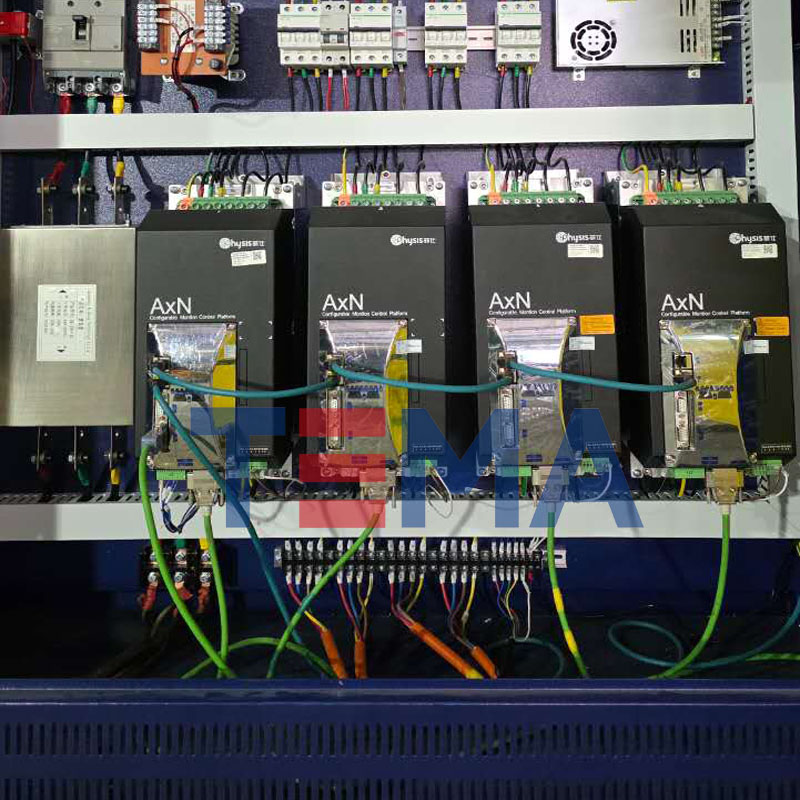
The choice between two servo motors and four vibration motors represents different design philosophies in block machine vibration systems. Each configuration has distinct characteristics suited to different production requirements.
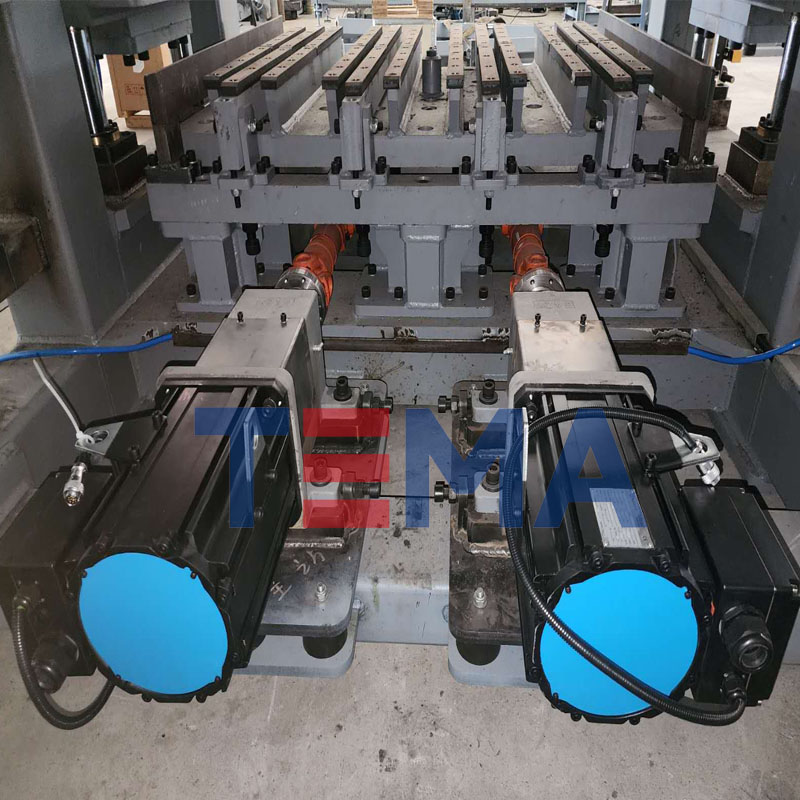
Typical Application: Machines equipped with two servo motors, such as the TEMA TM10000 model which uses 2×12KW servo vibration.
Key Characteristics:
| Aspect | Two Servo Motors |
|---|---|
| Synchronization | Forced synchronous mechanism ensures the two motors remain perfectly synchronized, guaranteeing vertical compaction force output |
| Cost Efficiency | Lower component costs—fewer motors, drives, and controllers required |
| Control Complexity | Simpler control architecture with fewer electronic components to manage |
| Vibration Distribution | Vibration energy is transmitted through the frame from two primary sources |
| Typical Applications | Medium to high-capacity production, standard block types |
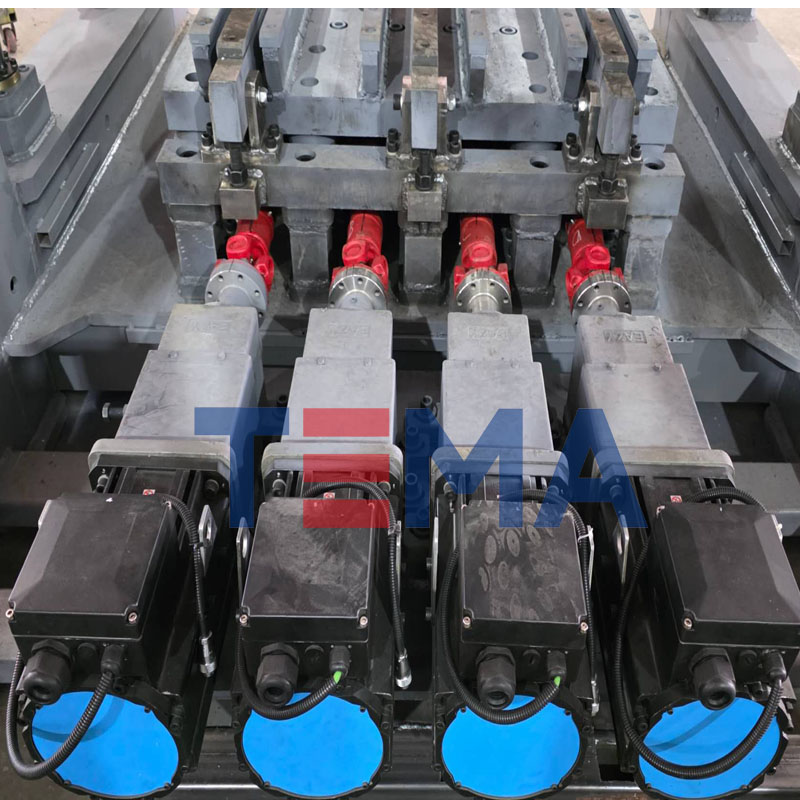
Typical Application: Machines like the TEMA TM15000 utilize a four-axis servo-driven vibration system with four motors controlled by an integrated motion controller. Some advanced designs use eight vibrators (e.g., TM18000 with 8 vibrators).
Key Characteristics:
| Aspect | Four Motors |
|---|---|
| Synchronization | Four motors with individual servo drives allow independent phase adjustment for each eccentric mass |
| Cost | Higher initial investment—requires four servo drives and motors, significantly increasing system cost |
| Control Precision | Greater flexibility in adjusting the direction and magnitude of resultant force by changing phase relationships among four eccentric blocks |
| Vibration Distribution | More uniform vibration energy distribution across the vibration table, especially beneficial for larger platforms |
| Typical Applications | Large-scale production, complex products, dual-vibration table systems |
Energy Efficiency: Both configurations offer significant energy savings over traditional systems. The dual-servo configuration typically achieves energy savings of around 15%, while four-motor configurations can achieve 12% or more energy reduction with improved excitation efficiency. Some four-motor systems demonstrate excitation efficiency improvements of over 10% and start-up speed increases of more than 20%.
Vibration Uniformity: Four-motor configurations generally provide more uniform vibration across larger table areas due to the distributed nature of the vibration sources. This is particularly important for producing larger blocks or when using dual vibration tables.
Flexibility: Four-motor systems offer greater flexibility in adjusting vibration parameters for different product types. By independently controlling each motor's speed and phase, operators can fine-tune the vibration pattern to suit specific materials and block geometries.
Maintenance: Two-motor configurations have fewer components requiring maintenance, potentially reducing downtime and spare parts inventory. However, four-motor systems benefit from redundancy—if one motor requires service, the machine may continue operating at reduced capacity.


 English
 français
 русский
 español
 العربية