How to Select a Good Concrete Block Machine: A Complete Buyer’s Guide
Investing in a concrete block production line is a significant step for any construction or block manufacturing business. With so many options available in the market, choosing the right equipment can be overwhelming. To help you make an informed decision and maximize your return on investment (ROI), we have broken down the selection process into three critical steps.
1. Define Your Production Capacity Requirements
Before looking at machine models, you must have a clear understanding of your daily production goals. Machine size and cost are directly tied to output.
When calculating capacity, a standard industry benchmark is an 8-hour shift. You should define your needs based on the specific types of blocks you plan to produce:
Hollow Blocks: For example, do you need to produce 10,000 standard 40x20x20cm 8'' hollow blocks per 8 hours?
Paver Blocks: If you are focusing on paving stone production, do you need to cover 1,000 square meters of paving stone per shift?
Pro Tip: Always consider future business growth. It is often wiser to choose a machine with a slightly higher capacity than your current demand to avoid bottlenecks later on.
2. Determine the Automation Level (Align with Your Budget)
The level of automation determines not only the efficiency of your factory but also your labor costs and initial investment. You can choose from manual, semi-automatic, or fully automatic production lines based on your budget.
Key factors to consider regarding automation include:
Cement Feeding System: Will you use bagged cement (which requires more manual labor) or bulk cement silos (which feature automatic weighing and feeding)?
Finished Dry Blocks Packaging: Do you need an automatic cuber/packaging system to palletize and wrap the finished blocks, or will this be done manually?
By balancing labor costs in your local area against your upfront budget, you can find the perfect sweet spot for your automation level.
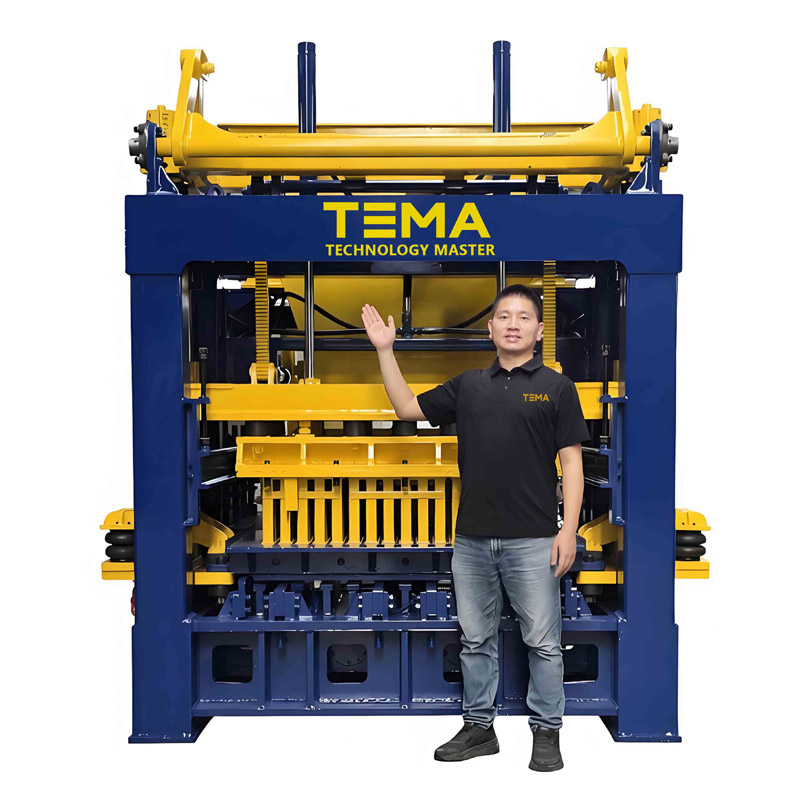
3. Analyze the Core Systems of the Main Block Machine
Once you have narrowed down the capacity and automation level, it’s time to look under the hood. A well-designed machine ensures longevity, low maintenance, and high product quality. Pay close attention to these five core systems:
Electrical Control System: Look for reputable brands (like Siemens PLC). A smart PLC system allows for easy troubleshooting, precise operation, and recipe storage.
Hydraulic System: The hydraulic valves and pumps must be heavy-duty and proportional to ensure smooth, high-pressure movements without fluid leakage.
Vibration System: High-quality blocks require optimal density. A superior vibration system distributes the vibrating force evenly across the mold, ensuring every block is uniform and strong.
Material Feeding (Face Mix) System: For pavers, a fast and even feeding system is crucial to ensure the multi-color or base material is distributed perfectly without wasting cycles.
Synchronization System: Ensure the mold and tamper head move in perfect synchronization. Misalignment leads to uneven block heights and accelerates mold wear.
Conclusion
Selecting the right concrete block machine is a balance between your current production needs, your budget, and the mechanical quality of the equipment. Only a machine with a scientifically sound design and reliable core components can stand the test of time and bring you long-term profits.
Are you planning to start a block manufacturing business? Contact TEMA expert team today for a tailored solution and a free quote!




 English
 français
 русский
 español
 العربية